How to Increase Customer Lifetime Value (LTV): A Real-World Growth Guide for E-commerce Brands
In the fast-paced world of e-commerce, getting a sale is no longer the biggest win. The real success comes from getting customers to come back again and again, to buy more often, and to develop a real connection with your brand.
That’s the foundation of Customer Lifetime Value (LTV) — a key metric that measures the total revenue a customer will generate throughout their entire relationship with your business.
High LTV = long-term revenue, higher profit margins, and a sustainable brand that doesn’t rely entirely on acquiring new customers every month.
My Experience: First Impressions That Built Loyalty
I still remember the first time I bought a supplement from a company called Life Cykel. It wasn’t just about the product — it was about the entire experience.
The packaging was thoughtful: a soft-coloured box, easy-to-read instructions, and a welcome guide explaining the supplement in simple language. I didn’t just feel like a customer — I felt like a valued part of something bigger.
The quality of the product, combined with the clarity of the information, the branding, and even the colours, made me think:
“Wow, I bought something really good.”
This moment stuck with me — not because of the supplement itself, but because of the feeling it gave me.
And that’s what drives LTV: feelings. The emotions we connect with brands. The trust we build. The small signals that make us want to come back.
As the saying goes: “You never get a second chance to make a first impression.” In this case, that one impression made me a loyal, long-term customer.
Why Customer Lifetime Value (LTV) Matters
LTV is more than just a number — it’s your predictable income. It helps you forecast growth, reinvest in your best customers, and build a sustainable brand.
Let’s break it down:
- LTV = Average Order Value × Purchase Frequency × Customer Lifespan
If your average order is $100, and the customer buys from you once a month for 12 months, their LTV is:
$100 × 12 = $1,200
Compare that to your Customer Acquisition Cost (CAC) — let’s say you spend $25 to acquire that customer via Meta Ads.
Your first-order ROAS might be 4x:
$100 ÷ $25 = 4
But your lifetime ROAS?
$1,200 ÷ $25 = 48
That’s the power of focusing on LTV. You don’t need to lower CAC — you just need customers to stay longer.
Strategies to Increase Customer Lifetime Value (LTV)
A recent survey by Econsultancy found that the top three strategies brands use to increase LTV are:
- Customer service improvements (42%)
- Personalised experiences (34%)
- Cross-selling or up-selling (29%)
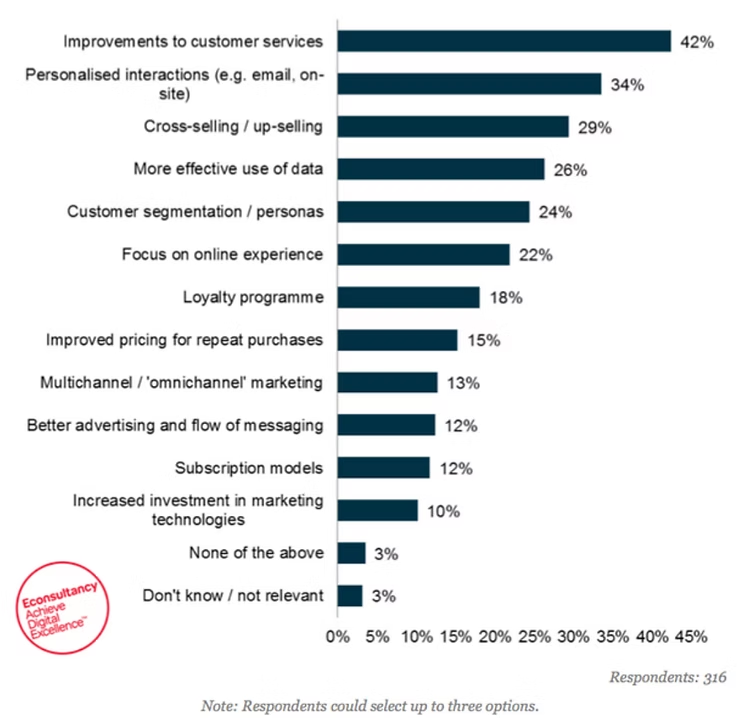
These findings confirm what we already know: Better customer experiences lead to longer relationships.
Let’s break down how to do that.
1. Deliver World-Class Customer Service
If you’ve ever shopped on Amazon, you know what great service feels like.
They may be tough on sellers, but for buyers, Amazon is built around ease, trust, and speed. 24/7 customer support. Hassle-free returns. Quick resolutions. And most of all, the confidence that you’ll be taken care of.
Now think about your brand.
- Do your customers feel heard?
- Can they reach you easily when something goes wrong?
- Do you go beyond the refund and actually show care?
These moments are where loyalty is either broken — or built.
Tip: Empower your customer service team to solve problems quickly and surprise customers with small gestures (e.g., discounts, gifts, follow-up emails). Those moments stick with people — and they tell others.
2. Create a Simple, Meaningful Loyalty Program
Loyalty programs are one of the most direct ways to increase LTV.
People love being rewarded. Not just with discounts, but with recognition. The idea that the more they buy, the more they gain — that’s what builds habit.
Example: A skincare brand gives members 1 point per $1 spent. At 100 points, they get $10 off. There are birthday gifts, exclusive drops, and early access to sales.
It’s not just about saving money. It’s about feeling special.
Tips to succeed:
- Keep it simple
- Show the reward value clearly
- Promote it across email, website, and post-purchase flows
3. Personalise the Shopping Experience
In a world of generic online stores, personalisation is how you stand out.
Use customer data to:
- Recommend personalised products
- Send emails with relevant content (not just sales)
- Offer bundles that align with their past behaviour
One brand I worked with took this to another level — they sold customised pet food. When ordering, customers filled out a form about their dog’s age, weight, and health conditions. Based on this, they received a monthly custom meal plan delivered to their door.
It was personal, predictable, and perfectly suited to a subscription model — which made it nearly impossible to replace.
4. Offer Subscription or Membership Models (In Detail)
If your product is consumable or used regularly (coffee, vitamins, food, cosmetics), a subscription model is one of the strongest ways to increase LTV.
Here’s what a smart subscription model achieves:
- Increases purchase frequency automatically
- Builds habits (your brand becomes part of the customer’s life)
- Reduces churn due to convenience
- Lowers CAC over time — no need to re-acquire the same customer
- Creates opportunities for upsells or bonus bundles
For example, a coffee brand offers a monthly subscription with 5% off, plus a free sample every three deliveries. Customers stay subscribed longer because it’s easy, affordable, and even fun.
Another example? A pet food company with a form-based customisation flow that tailors meals to the customer’s dog. Each order feels personal — and because it’s delivered monthly, the customer never even thinks of switching.
What About Membership Models?
Membership programs go beyond reordering — they build emotional loyalty.
Think of:
- Amazon Prime: Pay yearly, get free shipping, exclusive offers, and entertainment
- Beauty club VIPs: Members get early access, birthday gifts, and personalised consultations
Memberships create a shift in identity — the customer no longer just buys from you… they belong to you.
Example for a small brand: Charge $49/year for:
- Free express shipping
- A birthday bonus
- Access to a private Facebook group with Q&As and giveaways
- Access to a private Facebook group with Q&As and giveaways
Tips for success:
- Keep the membership value clear
- Remind customers of their benefits often
- Offer surprise perks to reduce churn
5. Use Omnichannel Communication
To stay top of mind, your brand must show up consistently, and not just in ads.
Use multiple channels:
- Email for education and post-purchase flows
- SMS for urgent drops and reminders
- Social media for storytelling and UGC
- Push notifications for restocks and bundles
But remember: Every message must add value. Don’t spam. Speak to the customer’s needs, and they’ll reward you with trust — and more purchases.
6. Track LTV Metrics and Optimise
Here’s how to calculate LTV:
LTV = Average Order Value × Purchase Frequency × Customer Lifespan
And don’t stop there. Watch:
- Repeat purchase rate (How many customers return?)
- Churn rate (How quickly do customers drop off?)
- Average time between orders
- Lifetime ROAS (How much long-term return are you getting from paid channels?)
Use these numbers to identify your best-performing segments — then double down with exclusive offers or retention campaigns.
Final Thoughts: LTV Is About Relationships
You don’t grow LTV with tricks. You grow it with trust.
Every step of the journey matters:
- The unboxing experience
- The follow-up message
- The ease of reordering
- The loyalty perks
- The way you respond when something goes wrong
If your customer feels seen, valued, and rewarded — they’ll come back. Not because they have to, but because they want to.
Start today by asking:
What experience am I delivering that would make someone want to stay?
What experience am I delivering that would make someone want to stay?
Then build from there — because in the end, a customer who stays is worth more than a hundred who only buy once.
⚡ Key Takeaway
Customer Lifetime Value (LTV) is the total revenue a customer generates over their entire relationship with your brand. The formula: LTV = Average Order Value × Purchase Frequency × Customer Lifespan. Increasing LTV by just 10% can be more profitable than acquiring 10% more customers.
📊 LTV Growth Strategies by Impact & Effort
| Strategy | Impact on LTV | Effort | Timeline |
|---|---|---|---|
| Email post-purchase flows | High (+15–25%) | Low | 1–2 weeks |
| Loyalty/rewards program | High (+20–30%) | Medium | 1–2 months |
| Subscription model | Very High (+40–60%) | High | 2–3 months |
| Personalised recommendations | Medium (+10–15%) | Medium | 2–4 weeks |
| Improved customer service | Medium (+10–20%) | Low | Immediate |
| Cross-sell/upsell flows | High (+15–25%) | Medium | 2–4 weeks |